

(The article was originally published in Indian Express as a part of Dr Ram Madhav’s column titled Ram Rajya on July 04, 2026. Views expressed are personal.)
There is a military and intelligence tactic called PSYOPs that agencies of various countries master and deploy. The psyops are structured disinformation campaigns aimed at creating suspicion, confusion and discontent among enemy ranks. Recent propaganda about a fictitious Track 2 dialogue between India and Pakistan at Colombo appears to be a classic example of one such psyop unleashed by interested parties and lapped up by sections of gullible and garrulous media and social media in India and also some politicians. No one waited to check the veracity of the story and went about passing comments on individuals named and unnamed.
A prestigious London-based prestigious think tank, has been hosting a South Asia conference annually for more than a decade in which reputed scholars, former diplomats, military and intelligence agency veterans, and occasionally politicians and serving officials participated from countries in South Asia and beyond including US, UK and China. Those conferences were not any Track 2 events as clarified by Indian foreign secretary Vikram Misry. Track 2 is a bilateral or multilateral dialogue track with a strategic objective that has the tacit approval of the governments. We ourselves host several such tracks with many countries. However, no track 2 happens with half-a-dozen countries around. The above conferences are like any other academic events hosted by think tanks all over the world including India, rightly described by one of the earlier participants as “talk shops”. No secret dialogues, no track 2 agenda but a structured conference schedule takes place in them in which participants express their views candidly.
The conference in Colombo was one such annual event with participation from US, UK, Sri Lanka, Pakistan, Afghanistan and India where a range of topics involving different countries in the region were taken up in multiple sessions. I just spoke in one session and left. The right curiosity for a mature audience should have been about the content of the discussions rather than intent.
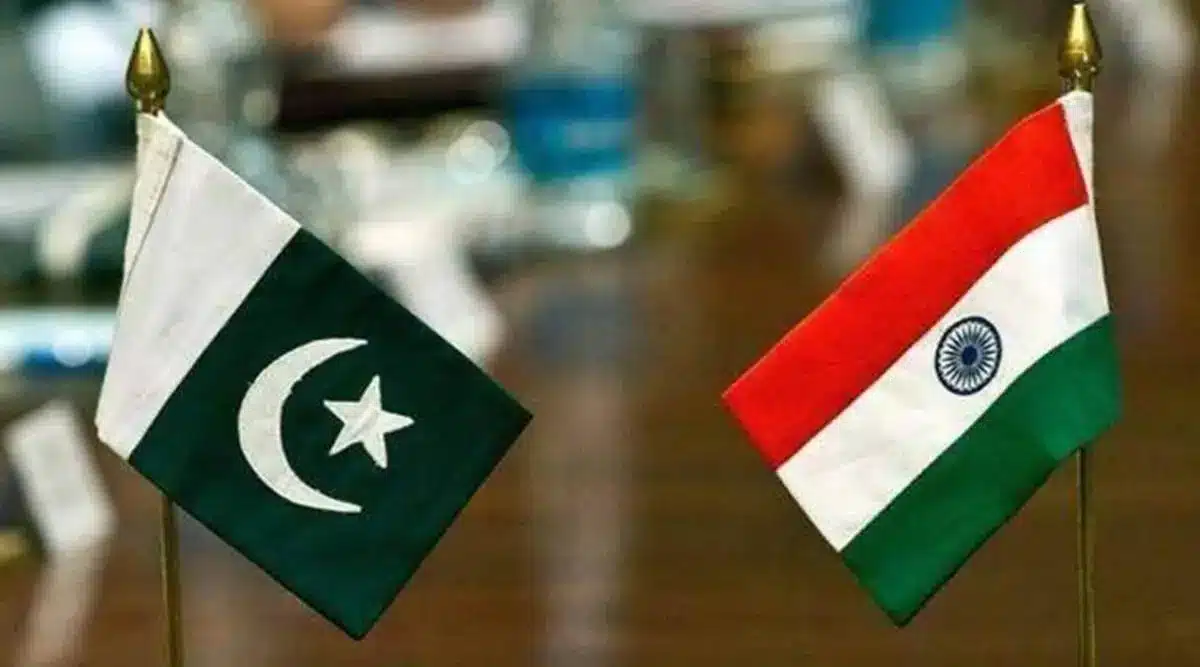
Any issue relating to India – Pakistan relations evokes strong sentiments in India. Those sentiments are reflected in these conferences too. While the Pakistani side was always seen eager for a formal engagement with India, the response from Indian side has always been a firm no. Reasoning of the Indian side was always unambiguous. Prime minister Narendra Modi broke India’s 6 year freeze by inviting his Pakistan counterpart, Nawaz Sheriff for the oath-taking ceremony in 2014. He made a path-breaking impromptu visit to Lahore a year later, extending an olive branch of friendship. But the recalcitrant neighbour misread the importance of those gestures and returned to its old habit by offering Uri and Phulwama terrorist attacks in succession in return. It didn’t realise who in India it was dealing with and ended up paying a heavy price when Modi government firmly declared curtens down on most forms of direct engagement.
India’s refusal to engage beyond sports like cricket certainly frustrates Pakistan. It feels belittled that India engages with all other countries, big and small, but discards its overtures. As far as India is concerned, we have moved on and joined the big league under Modi’s leadership and are no longer interested in being rehyphenated with the failed western neighbour. Moreover, Pahalgam terror attack in April 2025 demonstrated once again that there was no change in Pakistan’s policy of using terrorism as a state instrument to harass India. In such a scenario, India is neither having any appetite nor is in a hurry to restore engagement with it. After Pahalgam, India launched Operation Sindoor and successfully took out terror camps embedded deep inside the Pakistani territory. A ceasefire was reached after India’s mission was completed. Modi declared that it will be a “new normal” for India in dealing with Pakistan which holds good even now.
Pakistan prime Minister Shahbaz Sheriff boasted at the UNGA last October that he wanted to win peace with India. But the experience on the ground is otherwise. Although there were no major terror attacks in the country after Pahalgam, credit for it should go to the vigilent counterterror operations of the security and intelligence establishment of India. On its part, Pakistan continued to be the hotbed of global terror infrastructure. Saifullah Kasuri, commander of Lashkar-e-Toiba and the mastermind behind Pahalgam attack, continues to roam freely and issues repeated threats to India that his outfit “would never backdown from the Kashmir mission”. He wants to keep the Kashmir issue “hot” while his counterpart, Jaish-e-Mohammad goes about a recruiting spree hours before a recent India-Pakistan cricket match in Dubai.
Pakistan continues to push terrorists, weapons, money and drugs across the border into Kashmir. There were atleast five attempts in the last year to infiltrate terrorists across the border which were foiled by our security forces killing eight terrorists. In other hinterland operations, 13 more terrorists were neutralised and two apprehended. The apprehended terrorists were carrying enhansed encryption capabilities to evade detection. They revealed that their mission in India was to stay on for prolonged periods on the directions of their handlers from Pakistan and try to radicalise youth and induct them into terror ranks. Pakistan is also resorting to online radicalisation through magazines like TRR (The Revolutionary resurgence, HM) and ZUV (The Soul of Resistance, TRF), run by terror outfits, whose IP addressed were tracked by Indian agencies to that country, to spread anti-India propaganda, incite unrest, and promote separatist narratives in Kashmir.
After midwifing an unstable truce between America and Iran, Pakistan must be seeking to project itself as a champion of peace. But having seen the true colours of its conduct, India firmly adheres to its principle that “talks and terrorism cannot go together”. That has been the consistent message of India at all forums including Colombo.