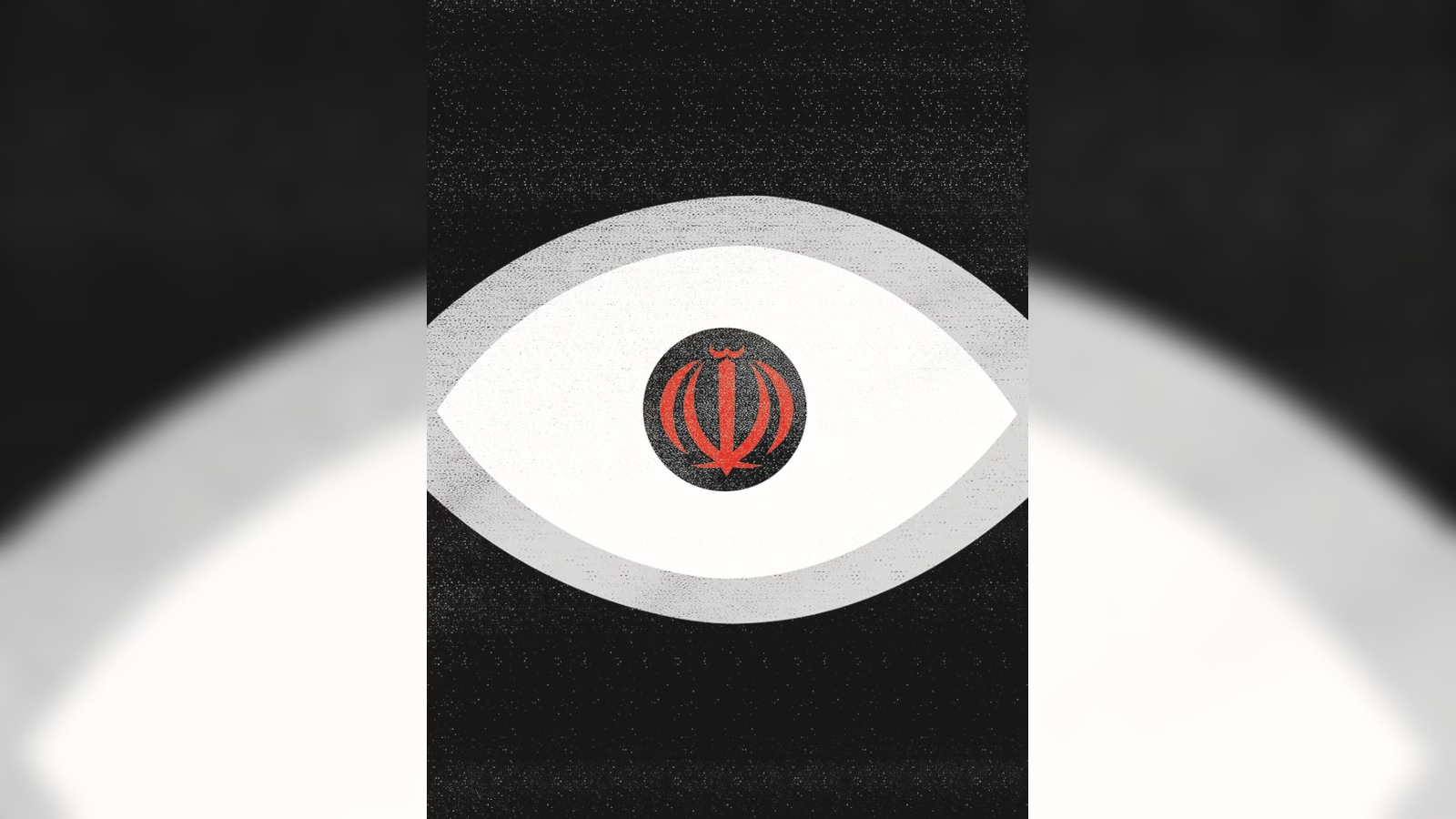
Sonia Gandhi's criticism of Government over Iran is misplaced
March 14, 2026


|
Getting your Trinity Audio player ready...
|
(The article was originally published in Indian Express on March 14, 2026 as a part of Dr Madhav’s column titled ‘Ram Rajya’. Views expressed are personal.)
India is not only the world’s largest democracy but a successful one too. It presented a model to its South Asian neighbours to emulate. In the last few decades, almost all of them turned democratic. India need not take credit for it, for, the credit goes to the people of those countries. But it should celebrate the success of those democracies.
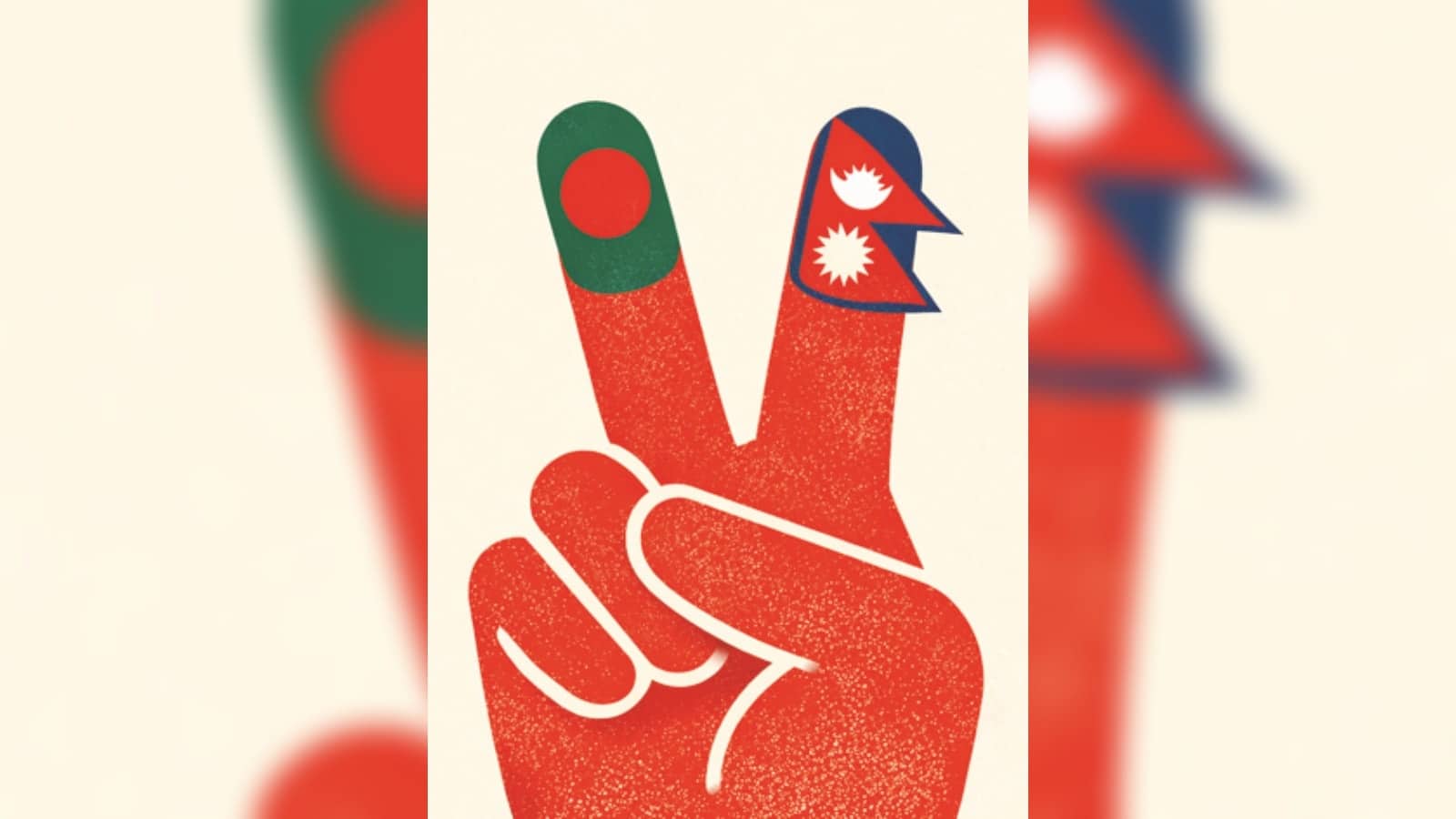
Last couple of months saw two important neighbours of India – Bangladesh and Nepal – successfully conducting elections and demonstrating their solid democratic credentials. Bangladesh held its parliamentary elections on February 12, ending the 18 months reign of an unelected and unaccountable regime. Nepal went to polls on March 5, six months after a popular revolt unseated the K P Sharma Oli-led government. Two things stood out in these elections – one, absolutely peaceful manner in which the elections were conducted, and two, commendable maturity that the electors in both countries – more than 75 million in Bangladesh and about 12 million in Nepal – demonstrated.
Bangladesh and Nepal witnessed popular revolts against the establishments that led to the ouster of prominent heads of governments – Sheik Hasina in Bangladesh in August 2024 and K P Sharma Oli in Nepal in September 2025. These revolts were not peaceful. Estimates vary in the case of Bangladesh with the official gazette numbers hovering around 850 deaths while the UN human rights investigation placing the number at above 1400. In Nepal, 76 deaths were recorded officially in various incidents of violence during the agitation. The abruptness and scale of violence in both cases prompted some observers to suspect the involvement of foreign agencies in it. But the fact remains that there were genuine reasons for popular unrest in both countries that spilled over on to the streets leading to unfortunate cycle of violence and deaths.
Bangladesh remained under the spell of an unelected regime led by Nobel laureate Mohammed Yunus for an unusually longer period. The regime’s antics didn’t endear it to people nor to its neighbours like India. In fact, India-Bangladesh relations touched the nadir under Yunus regime. In the run up to the elections, the National Citizens Party, backed by the student groups that spearheaded the agitation against Sheik Hasina government and remained a part of the interim regime subsequently, was seen as an important contender for power along with the fundamentalist Jamaat-e-Islami party, which came out of the Hasina era restrictions to operate freely in the country. Many suspected that the two parties, with the backing of the interim regime, would emerge as frontrunners for the government. Many feared that violence could mar the elections too.
But the voters in Bangladesh demonstrated utmost wisdom and maturity in rejecting violence and offering a landslide majority to the Bangladesh National Party (BNP), a seasoned warhorse in Bangladesh politics. Bangladesh is a populous country that needed a government with credibility and experience at this crucial juncture. The BNP, under the leadership of Tarique Rehman, is best suited to provide such a stable government.
The BNP government’s priorities include implementation of the constitutional and political reforms approved by the citizens in a referendum conducted by Yunus administration in February 2025. The referendum, that saw greater turnout of 87 million voters and secured the support of 83 percent of them, talked about certain key reforms like limiting the prime minister to two consecutive terms, providing 15 percent representation for youth in parliament and government posts, creating an independent anti-corruption body, and providing equal access to education, healthcare and employment for minorities and marginalised groups. While Yunus administration toed an overtly anti-India policy, Rehman is expected to bring in balance and bonhomie back in the relationship.
In Nepal, the voters chose a new party that came into the electoral scene just a few years ago. Rashtriya Swatantra Party, led by a 50-year-old journalist-turned-politician Ravi Lamichane and a 35-year-old rapper and youth sensation, and former mayor of Kathmandu, Balendra Shah, registered an unprecedented electoral victory by winning more than two thirds of the seats. Although the voter turnout was one of the lowest in recent decades, a country with more than 40 percent young voters opted for younger faces and new leaders this time. Traditional parties like the Nepali Congress and Communist Party of Nepal (UML) led by octogenarian leaders like Sher Bahadur Deuba and Khadga Prasad Sharma Oli were roundly rejected by voters.
Although Nepal began its democratic journey in 1990 after the monarchy allowed limited democracy, it never succeeded in establishing stable government in the country. While there were 16 prime ministers during the constitutional monarchy between 1990 and 2008, there came and went 15 prime ministers since the abolition of monarchy in 2008. In the last 4 elections since 2008, the Nepali electorate never gave a decisive mandate in favour of any single party. Election held in 2026 is that way a watershed moment in Nepal’s democratic history when a single party majority government is being formed in the country. Needless to mention that it offers greater stability and allows for mature decision-making by the government.
“Democracy is good. I say this because other systems are worse”, Jawaharlal Nehru once quipped. No democracy can be perfect, and no election will be complaint-free. But India has always been more comfortable dealing with fellow democracies. Luckily, except for Pakistan where a sham democracy prevails with the country’s military looming large over governance, all other neighbours seem to be following in India’s footsteps. Earlier, Maldives (2023) and Sri Lanka (2024) too conducted their elections peacefully that witnessed regime changes in both countries. In Myanmar too, elections were held to the national parliament in December 2025/January 2026. All those new regimes enjoy excellent relations with India.
Given the historically strong people-to-people ties between India and its neighbours, India should proactively reach out to the new governments in Bangladesh and Nepal and rebuild bilateral and regional relations that have suffered a bit in the last few years. Afterall, as Atal Bihari Vajpayee said, “we can change our friends but not neighbours”.