A storm is brewing in the Indian Ocean Region
January 17, 2026



|
Getting your Trinity Audio player ready...
|
(The article was originally published in Indian Express on January 17, 2026 as a part of Dr Madhav’s column titled ‘Ram Rajya’. Views expressed are personal.)
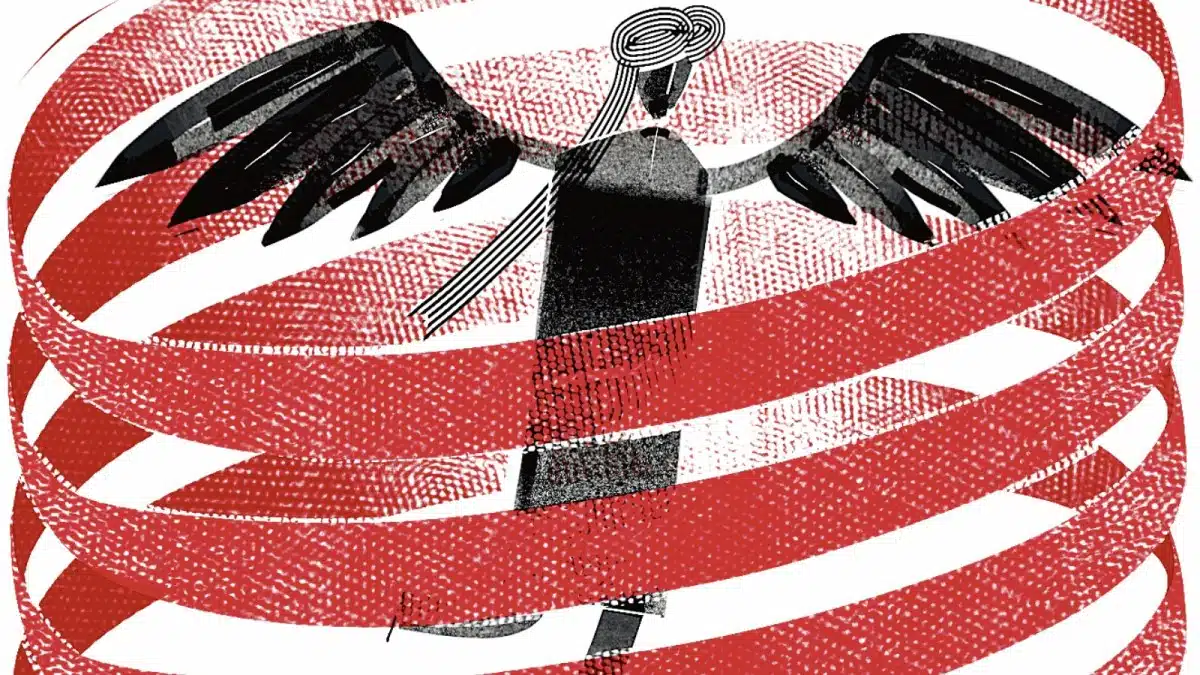
Two visits to the United States of America in a span of four months – between August last year and January this year – brought out the stark reality of a nation in a dangerous drift, never seen before. When I visited Washington DC in August last year, the debate was largely over the tariffs. Trump administration imposed tariffs on more than three dozen countries including India. India was subjected initially to a 25 percent slab, which was subsequently raised to 50 percent. By then, India had already negotiated a free trade agreement with the US, culmination of which would have addressed the tariffs issue.
In August, the debate was largely over the tariffs and their efficacy. Opponents of Trump’s tariff policies believed that it would lead to greater economic challenges like higher inflation, while its supporters argued that the tariffs would strengthen American economy and industry. A senior official at the US Department of Commerce, who was involved in the structuring of the tariff regime, told me that the additional revenues to the US exchequer in the first three months of the tariffs crossed $ 180 billion. Trump himself claimed that “anywhere between $600 billion to $1 trillion will be taken in” over a period of a year and told a Cabinet meeting in early December that “at some point in the not too distant future, you wouldn’t even have income tax to pay because the money we’re taking in is so great”.
Main concern for India at that time was to clinch the trade deal and address the issue of high tariffs that were certainly impacting sections of Indian exports. The Indian immigrants were in a bind with some visiting Indian leaders taunting them about not doing enough to build domestic pressure on the trade deal on one hand and the perceived economic benefits and the need to show loyalty to Trump’s Making America Great Again (MAGA) rhetoric on the other. Their dilemma was understandable, as the growing MAGA movement was demanding greater loyalty from the American citizens and the immigrant communities were under greater scrutiny.
Four months down the line, when I visited Washington DC earlier this week, the dilemma seems to have converted into a real worry. Some very fundamental changes are taking place in the American society and domestic politics that are causing a serious concern to Indian immigrants. On September 10 last year, Charlie Kirk, a 31-year-old conservative activist and the founder of an avowedly Right-wing organisation called Turning Point, was murdered at a university in Utah. That murder became a turning point in MAGA politics in the US. Although Kirk’s alleged murderer, Tyler James Robinson, was not an immigrant and claimed to have told his fiancée that he “had enough of his hatred. Some hate can’t be negotiated out”, the MAGA movement soon became an active place for “anti immigrantism”.
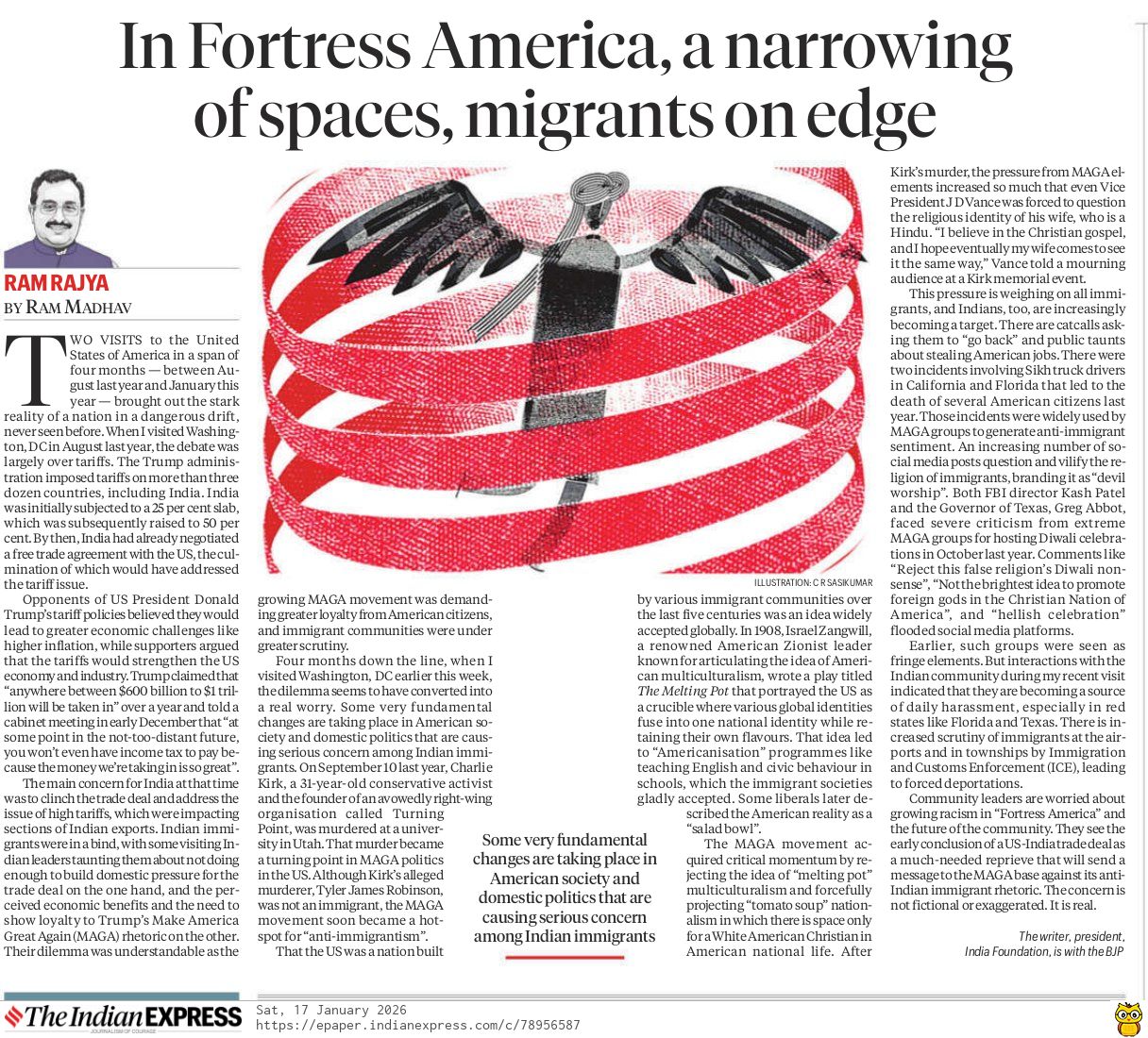
The MAGA movement always believed in building the US into a White American Christian fortress. Earlier, that agenda was limited to some conservative academics and scholars like Samuel Huntington, a renowned Harvard political scientist.
That the US was a nation built by various immigrant communities over last five centuries was an idea widely accepted globally. In 1908, Israel Zangwill, a renowned American Zionist leader known for articulating the idea of American multiculturalism, enacted a play titled “melting pot” that portrayed the US as a crucible where various global identities fuse into one national identity while retaining their own flavours. That idea led to “Americanization” programs like teaching English and civic behaviour in schools which the immigrant societies gladly accepted. Some liberals later described American reality as a “salad bowl”. But Huntington argued against both “melting pot” and “salad bowl” versions of American nationalism and instead preferred metaphors like “tomato soup” where the “American creed” remains the dominant base.
The MAGA movement in America acquired critical momentum in forcefully projecting that “tomato soup” nationalism in which there is place only for a White American Christian in the American national life. After Kirk’s murder, the pressure of MAGA elements increased so much that even Vice President J D Vance was forced to question the religious identity of his wife, who is a Hindu. “I believe in the Christian gospel and I hope eventually my wife comes to see it the same way”, Vance told a mourning audience at a Kirk’s memorial event.
This pressure is building up in several states in America over immigrants and Indians too are increasingly becoming a target of the same. There are cat calls asking them to go back and public taunts about stealing American jobs. There were two incidents involving Sikh truck drivers, in California and Florida, that led to the death of several American citizens last year. Those incidents were widely used by MAGA groups to generate anti-immigrant sentiment. Increasing number of social media posts question and vilify the religion of the immigrants branding it as “devil worship”. Both FBI director Kash Patel and Governor of Texas, Greg Abbot faced severe criticism from extreme MAGA groups for hosting Diwali celebrations in October last year. Comments like “Reject this false religion’s Diwali nonsense”, “Not the brightest idea to promote foreign gods in the Christian Nation of America”, and “hellish celebration” flooded social media platforms.
Earlier, such groups were seen as fringe elements. But interactions with Indian community during my recent visit indicated that they are no longer in the fringes and are becoming a matter of daily harassment, especially in Red states like Florida and Texas. There is increased scrutiny of immigrants at the airports and in townships by the Immigration and Customs Enforcement (ICE) agency leading to forced deportations.
There is worry writ large on the faces of the community leaders about growing racism in “Fortress America” and the future of the community. They see early conclusion of a US-India trade deal as a much needed reprieve that will send a message to the MAGA against its anti-Indian immigrant rhetoric. The concern is not fictional or exaggerated. It is real.