

(The article was originally published in Indian Express as a part of Dr Ram Madhav’s column titled Ram Rajya on July 25, 2026. Views expressed are personal.)
Dissent is a fundamental right. In non-democratic systems, people resort to clandestine protests in the form of sabotage or violence to express their dissent. But dissent in a democracy must be disciplined. Because unlike other systems, democracy recognises dissent as the constitutional right of the citizens. Article 19 (1) (a) of the Indian Constitution guarantees freedom of speech and expression, which also includes the right to peacefully disagree and critique the government. It is this fundamental right that the agitating students in Delhi are entitled to enjoy. However, they must also keep in mind that this right comes with reasonable restrictions in the interest of the sovereignty and integrity of India, public order, decency and morality etc. They are expected to uphold the discipline of democratic dissent.
The core issue raised by the agitating students concerns the erroneous conduct of examinations by the National Testing Agency (NTA). The NEET-UG examination paper leak that led to the cancellation of the exam a couple of months ago causing enormous agony to a large number of students was a genuine issue. There were widespread protests over the leak and the government promptly acted and handed over the case to the CBI. Thirteen accused have been arrested against whom legal proceedings are going on. Subsequently, the exam was reconducted without any glitch in which over 20 lakh candidates participated. Results were declared on schedule with over 11 lakh students qualifying. Ideally, the natter should have ended with that. But it didn’t. It is understandable if the agitators demanded reform and overhaul in the conduct of the competitive examinations. But their demand is limited to removal of the education minister. Accountability is an important argument, but it should be about reforming the system and punishing those involved in malpractices. Both have been effectively addressed by the government.
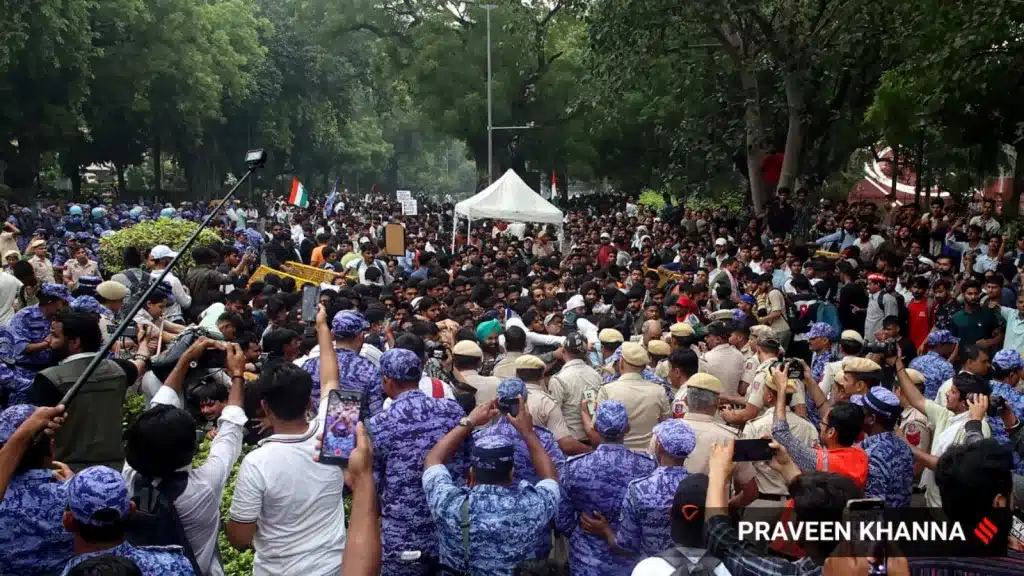
Over the course of a month of the agitation, the assembly at the designated protest site near Jantar Mantar has acquired critical mass and momentum with the joining of several other sections of people. When a movement acquires that momentum vested interests, professional ‘Andolan Jeevis’ and political parties also take a plunge. We are witnessing that phase of the movement now. Several objectionable slogans began to be raised at the venue. Violence and attacks on security personnel too were reported.
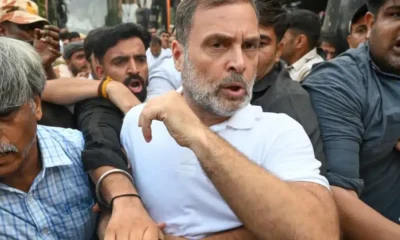
The plunge taken by the opposition parties, led by Congress, cannot per se be objected to, but their refusal to use the constitutional platform of the parliament to discuss the matter points to the anarchist nature. It was evident when a group of MPs led by the leader of the opposition, Rahul Gandhi indulged in a sudden sit-in protest outside prime minister’s residence knowing well that it was against the rules and public order. On the one hand, Rahul Gandhi demanded accountability for paper leaks from the government, but on the other, he himself publicly refused to be accountable to the laws claiming it to be his “prerogative”. The government expressed its willingness to debate the issue in the parliament. But the opposition is running away from it because they know very well the consequences of such a debate. Paper leaks are not happening for the first time in the country. Not a single year passed during the UPA regime without accusations of that nature confronting the government. Yet not a single minister ever resigned nor anyone held accountable and punished. This is not whataboutery. It only exposes the duplicity of the opposition and their reticence to debate the matter in the parliament.
The government is sympathetic to the legitimate concerns of the agitating students. It was the Modi Government that enacted Public Examinations (Prevention of Unfair Means) Act 2024, first ever law to tackle paper leaks and other unfair means prescribing strict punishments including fines up to Rs. 1 crore. Respecting the sentiments of the students, the prime minister announced fast track courts and stringent punishments to tackle these cases.
The government is also sincere in constructively engaging with the leaders of the agitation to address their concerns. Two central ministers were deployed to speak with them. The ball clearly is in the court of those young leaders. It is good that Sonam Wangchuk, the social activist supporting the agitation, decided to end his fast. He understood that with the entry of various interests into the movement there is the danger of it losing the way. Wangchuk and the agitating students succeeded in making their views heard across the country. It is time now to work towards a resolution through active engagement with the government. The movement for a genuine cause should not be allowed to turn into the “grammar of anarchy”, to quote Ambedkar, when a sincere government and secure constitutional methods are available to address the issues.