

(The article was originally published in Indian Express on March 21, 2026 as a part of Dr Madhav’s column titled ‘Ram Rajya’. Views expressed are personal.)
Elections to five states, scheduled to be held in April, are going to be a real test for both the national parties – BJP and Congress. Like in 2021, Bengal will remain the most high-stakes election in this round too. Chief Minister Mamata Banerjee’s Trinamool Congress (TMC) won the elections thrice before – 2011, 2016 and 2021 – and desperate to retain power for the fourth time. On the other side is the BJP, which witnessed a dramatic rise from zero seats and 4 percent vote share in 2011 to 77 seats and 38 percent vote share in 2021, posing a serious challenge to the 4th term aspirations of the TMC.
BJP’s rise in the last one decade has been commendable. It entered the state assembly in 2016 with three seats and about 10 percent vote share but quickly rose by attracting not only the dissidents in TMC but a large number of grassroots workers and supporters of the Congress and Left Parties. The spectacular rise of BJP as the main challenger to the TMC by 2021 assembly elections happened due to the joining of senior TMC leader and Mamata’s bete noir Suvendu Adhikari in 2020 along with nine other MLAs and one MP. In the elections held to the state assembly in 2021 Adhikari fought against Mamata in Nandigram and defeated her causing ripples in state politics and catapulting the party to contender for power in 2026. Five years later, it is going to be a direct fight between TMC and BJP in Bengal in this round of assembly elections.
Over fifteen years, Mamata Banerjee’s government has failed in providing effective governance in the state that suffered enormously under the Left Parties’ rule for three decades before her ascent. In fifteen years, Mamata could not retrieve the state from the damage done by the Left in industrial and economic development. State suffers from enormous levels of unemployment rates today. Her Banglar Yuva Sathi scheme, announced just before the election, offered a meagre 1500 rupees per month for the unemployed youth. Interestingly, it saw millions rushing to apply proving the allegation that her government failed miserably in employment generation and industrial growth.
Mamata faces serious incumbency challenge as several of her traditional support groups like women and Muslims see non-delivery of promised benefits. Crimes against women became a major issue in Bengal like the R G Kar Medical College rape and murder, Durgapur gangrape of a medical student, and many others surfacing in recent years. Incidentally, unemployment rates are higher among the Muslims in the state. Given the strong undercurrent of anti-incumbency, Mamata would face the going tough in this election. But the BJP has to face the TMC not at one but three levels. Firstly, like the Left Parties in the past, Mamata too converted entire state bureaucracy, right down to the village, into a party machinery. Bengal ranks first in politicisation of bureaucracy. Secondly, the TMC has organisational presence across the state with a lot of muscle power. And thirdly, Mamata also depends on hired political agency politics. Thousands of paid workers of the agency too operate at the grassroots level.
Bengal is a challenge not only for BJP but even more for the election commission given the above scenario. Conducting elections in a peaceful and orderly manner is the gigantic task that the commission has to perform. It conducted SIR successfully and deleted 6.1 million names from the voters list. Another six million doubtful voters have been asked to prove their credentials. The commission has to complete the process on time. Voter intimidation by TMC’s goons, switching off the cameras in polling stations during polling time by sympathetic bureaucracy, impersonation with the help of pliant law and order machinery are the other challenges that the commission needs to check in order to ensure a fair election, which may lead to the end of 15-year rule of Mamata in the state.
Assam election results appear to be a foregone conclusion with the strong performance of the BJP state government and also a complete political mess that the Congress landed itself in. Chief minister Himanta Biswa Sarma proved an excellent administrator. Under his leadership, the state consistently registered GDP growth rates well above the national average and stands as one of the top growing economies in the country. It attracted huge private investments in energy and healthcare sectors while Sarma’s government too significantly increased capital expenditure on infrastructure and other developmental projects. The chief minister remains hugely popular with his aggressive political posturing. On the other hand, Congress, under Priyanka Gandhi’s supervision, is in a complete mess with several senior leaders leaving it and joining BJP in recent months. BJP’s victory for the third time will be no surprise.
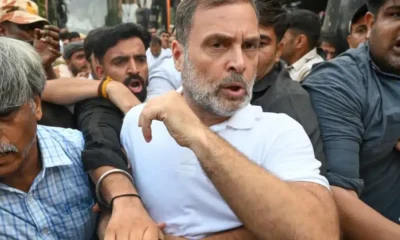
Kerala will witness another interesting election this time. Rise of Rahul Gandhi in Congress and its political decline have been coterminous, and Kerala is also an example of this. Since 1990 the state always alternated the governments between the LDF and the UDF. But the LDF broke that cycle in 2021 and returned to power for a second consecutive term. Congress touched lowest number of seats in that election. Like in Assam, the party is in a mess in Kerala too mired in factionalism and disgruntled senior leaders wanting to jump the ship just before the elections. It will be interesting if Kerala throws up a hung verdict, and the BJP emerges as the dark horse.
Tamil Nadu and Pondicherry remained bastions for regional parties for decades. The scenario is likely to remain the same unless one of the national parties takes up a long-term vision and seeks to grow independently.
For the BJP, this round of elections will be an upward surge in all the five states. But the real challenge is for the Congress. Already the rot in Congress came out during the Rajya Sabha polls in the form of defections. Despite tall claims by some leaders, its failure is writ large in Assam. But the real test is in Kerala, where losing the election may lead to disintegration and collapse of the party. A test for family feudalism.