

(The article was originally published in Indian Express as a part of Dr Ram Madhav’s column titled Ram Rajya on November 14, 2026. Views expressed are personal.)
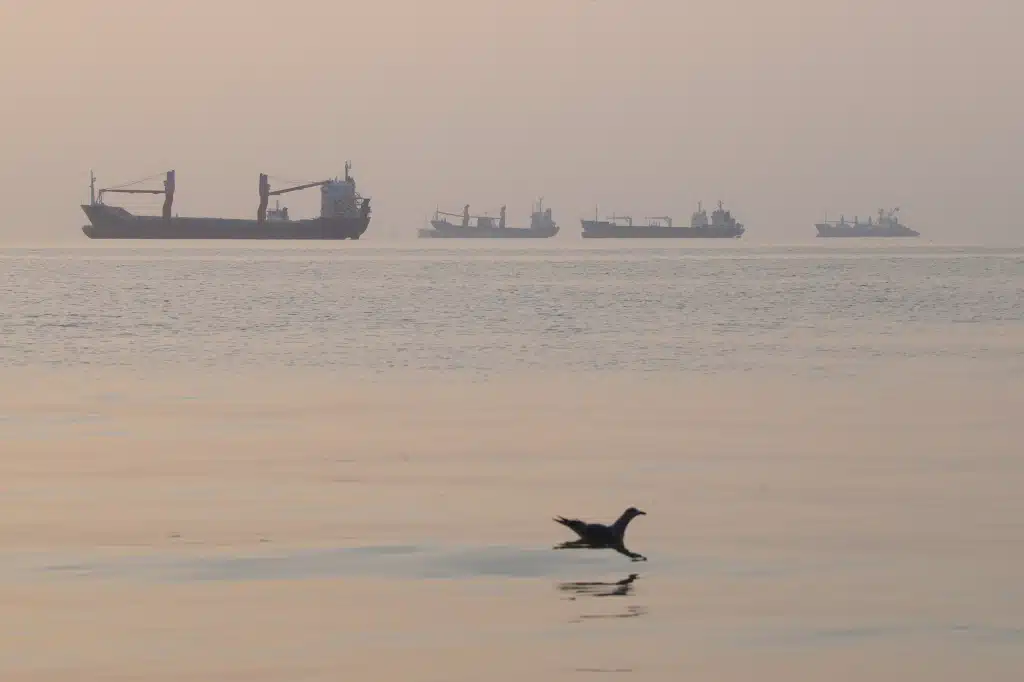
History, from the fifth century vintage Peloponnesian War between Athens and Sparta to the recent US – Iran War and the blockade of Hormuz and Bab-el-Mandeb straits, stands testimony to the fact that a few choke points – narrow maritime routes that can be controlled by territorial armies – defined and regulated global economy. When the Spartans, rivals of the Athenians, took control of the Bosporus – the narrow water way which was the lifeline for food and other supplies – Athens simply collapsed.
Seven centuries later, the Roman emperor Constantine established his capital on the banks of the same waterway, called Constantinople then and Istanbul now, ending the Greek era and beginning the era of the Romans. The Roman rule lasted for a millennium, until the Ottomans captured the region and controlled the Bosporus until the 1st World War.
Like the Bosporus, there are several other choke points in the world. Since the outbreak of the Russia -Ukraine War four years ago and subsequently the US – Iran War last year, some of these choke points became a nightmare for world economy. The blockades imposed by various regional powers, like the Iranians in the Hormuz Strait and the Houthis of Yemen in Bab-el-Mandeb, led to a major energy crisis in many parts of the world.
But to limit the impact of these developments around choke points to economy alone will be an understatement. They have the potential to cause tectonic shifts in the global power balance too. After the 2nd World War, global multilateral institutions were created to regulate the economic forces. But soon, trade emerged as a new weapon and countries, especially the US, began to use it for coercion. That weaponisation had led to the Suez Canal crisis in 1956. President Nasser of Egypt decided to nationalise this important trade channel from the British and French stakeholders. A brief conflict ensued but US President Eisenhower’s intervention had led to the backing off of the European powers and the control going into the hands of Nasser, where it remained since then.
That provided a template for how choke points can become weapons of trade for various countries. In between, during the 1990s, when information technology era dawned and globalisation acquired momentum, some scholars believed that the political control of trade would end. Walter Wriston, an eminent American financier, predicted in his 1992 book ‘The Twilight of Sovereignty’ that the national governments would grow obsolete in the face of the two emerging forces – global finance and information technology. He concluded that as the multinational corporations stitch global supply chains and establish dominance worldwide, “it will become harder and harder for politicians to unscramble the emerging global economy and reassert their declining power”. This prediction remained a reality for a couple of decades, but soon the political leadership found its way back into taking control of the global economy and trade. Choke points played a crucial role in that. The current Hormuz and Bab-el-Mandeb crisis stands proof to that.
But these crises, as I said earlier, don’t limit to economy and trade. They change the power pecking order in the world. The Suez Canal crisis had resulted in the decline of Britain and France as global powers and the emergence of US – USSR bipolarity in the world. Something similar would happen as a fall out of the current crisis too with new forces emerging and the old fading away.
The Suez crisis had brought Charles de Gaulle back to power in France. He made efforts to save Europe and the world from bipolarity. He rejected the Cold War dominance of Washington DC and Moscow and advocated the “Third Force” concept. He envisioned Europe – “from Atlantic to the Urals” – as a distinct cultural and geographical entity, “Europe des Patries” (Europe of Fatherlands) and argued that it should have an autonomous voice. He might not have succeeded in his grand vision, but at least, he created an independent foreign policy for France.
Interestingly, at a recent media convention in Delhi, Prime Minister Narendra Modi talked about the same issues confronting the world, including the emergence of new powers, new economies and new aspirations and the failure of the existing institutions to adapt to those changing realities. “The challenge is: in a changing world, how do we build an order where new realities find their place, global institutions become more effective, and the spirit of cooperation among nations is reinforced?”, he asked, adding “this is where India’s role comes to the fore”.
On an earlier G-20 related occasion, Modi talked about “a new world order for the collective well-being of humankind”. De Gaulle attempted and achieved limited success seven decades ago. Given his stature and reputation in the world, Modi can achieve full success by leading the effort for shaping the new world.