

(The interview was published by India World in the February 2026 issue. Views expressed are personal.)
Without strong corporate leadership, investment won’t translate into influence. If India wants lasting strategic leverage, it must pair state vision with entrepreneurial scale and technological ambition.
The global order is no longer merely shifting; it is being remade. The fundamental assumptions of post-Second World War international politics—Western leadership, stable alliances, and rule-based multilateralism—are fraying under the combined pressures of China’s rise, geopolitical disruption, technological asymmetries, and institutional fatigue. Power is disperging unevenly, producing a more fragmented and contested international system.
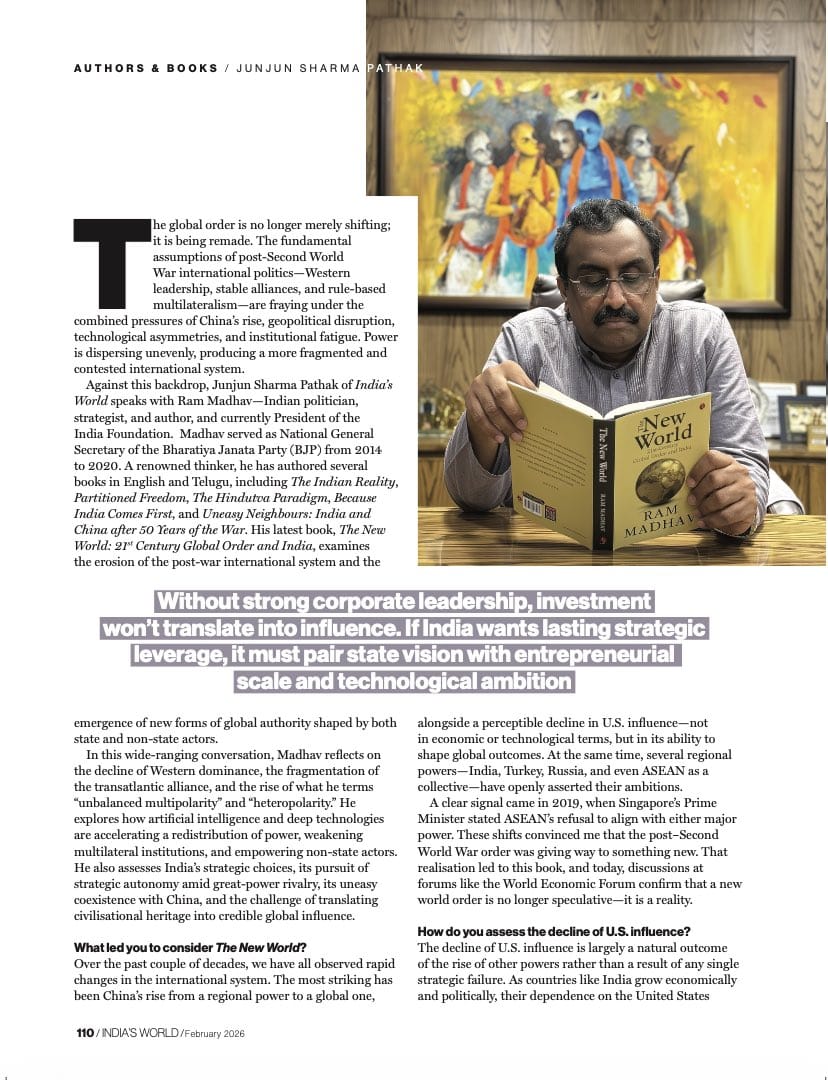
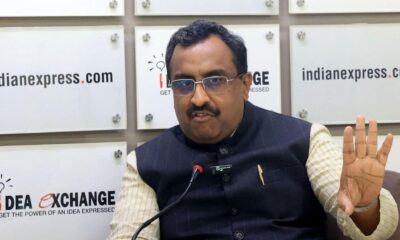
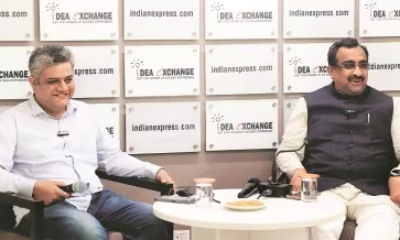
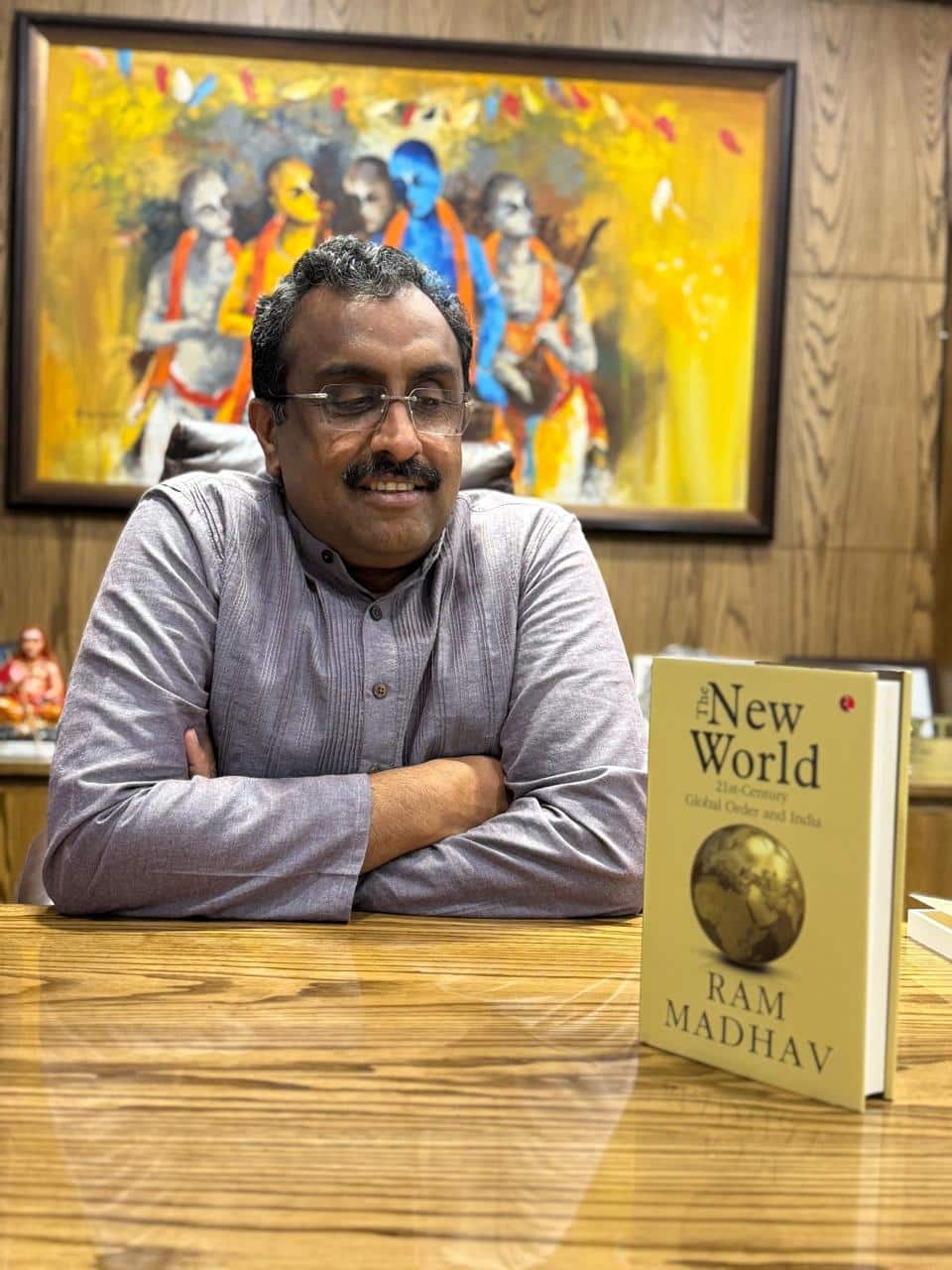
Against this backdrop, Junjun Sharma Pathak of India’s World speaks with Ram Madhav—Indian politician, strategist, and author, and currently President of the India Foundation. Madhav served as National General Secretary of the Bharatiya Janata Party (BJP) from 2014 to 2020. A renowned thinker, he has authored several books in English and Telugu, including The Indian Reality, Partitioned Freedom, The Hindutva Paradigm, Because India Comes First, and Uneasy Neighbours: India and China after 50 Years of the War. His latest book, The New World; 21st Century Global Order and India, examines the erosion of the post-war international system and the emergence of new forms of global authority shaped by both state and non-state actors.
In this wide-ranging conversation, Madhav reflects on the decline of Western dominance, the fragmentation of the transatlantic alliance, and the rise of what he terms “unbalanced multipolarity” and “heteropolarity.” He explores how artificial intelligence and deep technologies are accelerating a redistribution of power, weakening multilateral institutions, and empowering non-state actors. He also assesses India’s strategic choices, its pursuit of strategic autonomy amid great-power rivalry, its uneasy coexistence with China, and the challenge of translating civilisational heritage into credible global influence.
What led you to consider The New World ?
“Over the past couple of decades, we all have observed rapid changes in the international system. The most striking has been China’s rise from a regional power to a global one, alongside a perceptible decline in U.S. influence—not in economic or technological terms, but in its ability to shape global outcomes. At the same time, several regional powers—India, Turkey, Russia, and even ASEAN as a collective—have openly asserted their ambitions.”
“A clear signal came in 2019, when Singapore’s Prime Minister stated ASEAN’s refusal to align with either major power. These shifts convinced me that the post–Second World War order was giving way to something new. That realisation led to this book, and today, discussions at forums like the World Economic Forum confirm that a new world order is no longer speculative—it is a reality.”
How do you assess the decline of U.S. influence?
“The decline of U.S. influence is largely a natural outcome of the rise of other powers rather than a result of any single strategic failure. As countries like India grow economically and politically, their dependence on the United States inevitably decreases. At the same time, certain policy choices of the US administration, particularly the alienation of long-standing allies in Europe, have accelerated this loss of influence. Together, the rise of multiple power centres and Washington’s own missteps have weakened America’s ability to lead, contributing to a more diffuse and multipolar global order.”
“Recent developments reinforce this argument. President Trump’s remarks at the World Economic Forum reflected a clear inward turn, emphasising American strength over shared responsibility and reviving a unipolar mindset. In contrast, European leaders spoke openly of autonomy and independence. Notably, EU leaders even referred to the dollar as a “foreign currency,” signalling unease with U.S. dominance. Issues like Greenland and NATO are symptoms of broader transatlantic strain. As trust erodes, Europe is increasingly looking toward Asia, including India and China. This fragmentation within the West will weaken its global influence and accelerate the shift toward a multipolar world in which power is uneven but widely distributed.”
The present international system is described as “unbalanced multipolarity” in your book. Could you elaborate briefly?
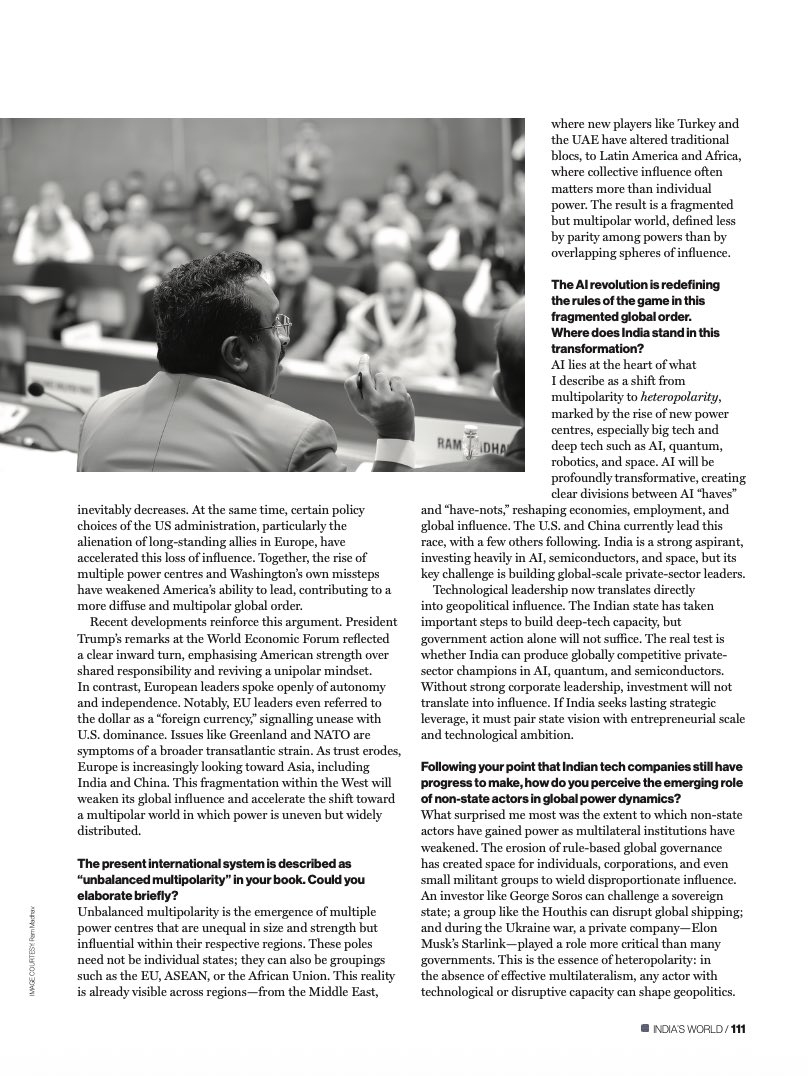
“Unbalanced multipolarity is the emergence of multiple power centres that are unequal in size and strength but influential within their respective regions. These poles need not be individual states; they can also be groupings such as the EU, ASEAN, or the African Union. This reality is already visible across regions—from the Middle East, where new players like Turkey and the UAE have altered traditional blocs, to Latin America and Africa, where collective influence often matters more than individual power. The result is a fragmented but multipolar world, defined less by parity among powers than by overlapping spheres of influence.”
The AI revolution is redefining the rules of the game in this fragmented global order. Where does India stand in this transformation?
“AI lies at the heart of what I describe as a shift from multipolarity to heteropolarity, marked by the rise of new power centres, especially big tech and deep technologies such as AI, quantum, robotics, and space. AI will be profoundly transformative, creating clear divisions between AI “haves” and “have-nots,” reshaping economies, employment, and global influence. The U.S. and China currently lead this race, with a few others following. India is a strong aspirant, investing heavily in AI, semiconductors, and space, but its key challenge is building global-scale private-sector leaders.”
“Technological leadership now translates directly into geopolitical influence. The Indian state has taken important steps to build deep-tech capacity, but government action alone will not suffice. The real test is whether India can produce globally competitive private-sector champions in AI, quantum, and semiconductors. Without strong corporate leadership, investment will not translate into influence. If India seeks lasting strategic leverage, it must pair state vision with entrepreneurial scale and technological ambition.”
Following your point that Indian tech companies still have progress to make, how do you perceive the emerging role of non-state actors in global power dynamics?
“What surprised me most was the extent to which non-state actors have gained power as multilateral institutions have weakened. The erosion of rule-based global governance has created space for individuals, corporations, and even small militant groups to wield disproportionate influence. An investor like George Soros can challenge a sovereign state; a group like the Houthis can disrupt global shipping; and during the Ukraine war, a private company—Elon Musk’s Starlink—played a role more critical than many governments. This is the essence of heteropolarity: in the absence of effective multilateralism, any actor with technological or disruptive capacity can shape geopolitics.”
What lies at the core of the current crisis in multilateralism?
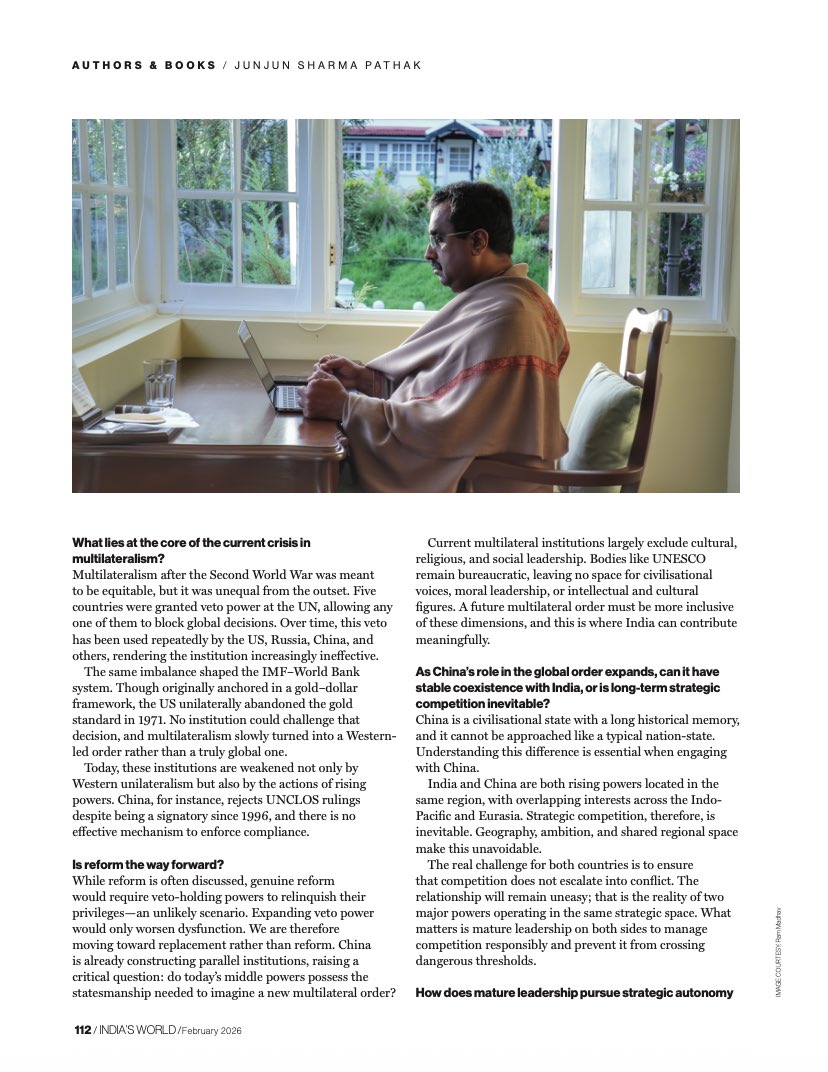
“Multilateralism after the Second World War was meant to be equitable, but it was unequal from the outset. Five countries were granted veto power at the UN, allowing any one of them to block global decisions. Over time, this veto has been used repeatedly by the US, Russia, China, and others, rendering the institution increasingly ineffective.
“The same imbalance shaped the IMF–World Bank system. Though originally anchored in a gold–dollar framework, the US unilaterally abandoned the gold standard in 1971. No institution could challenge that decision, and multilateralism slowly turned into a Western-led order rather than a truly global one.”
“Today, these institutions are weakened not only by Western unilateralism but also by the actions of rising powers. China, for instance, rejects UNCLOS rulings despite being a signatory since 1996, and there is no effective mechanism to enforce compliance.”
Is reform the way forward?
“While reform is often discussed, genuine reform would require veto-holding powers to relinquish their privileges—an unlikely scenario. Expanding veto power would only worsen dysfunction. We are therefore moving toward replacement rather than reform. China is already constructing parallel institutions, raising a critical question: do today’s middle powers possess the statesmanship needed to imagine a new multilateral order?”
“Current multilateral institutions largely exclude cultural, religious, and social leadership. Bodies like UNESCO remain bureaucratic, leaving no space for civilisational voices, moral leadership, or intellectual and cultural figures. A future multilateral order must be more inclusive of these dimensions, and this is where India can contribute meaningfully.”
As China’s role in the global order expands, can it have stable coexisence with India, or is long-term strategic competition inevitable?
“China is a civilisational state with a long historical memory, and it cannot be approached like a typical nation-state. Understanding this difference is essential when engaging with China.”
“India and China are both rising powers located in the same region, with overlapping interests across the Indo-Pacific and Eurasia. Strategic competition, therefore, is inevitable. Geography, ambition, and shared regional space make this unavoidable.”
“The real challenge for both countries is to ensure that competition does not escalate into conflict. The relationship will remain uneasy; that is the reality of two major powers operating in the same strategic space. What matters is mature leadership on both sides to manage competition responsibly and prevent it from crossing dangerous thresholds.”
How does mature leadership pursue strategic autonomy in a fragmented world order?
“Strategic autonomy is never easy; it carries real costs and demands leadership, political courage, and long-term vision.”
“India’s approach today is very different from the Nehru-era non-alignment. It is not about staying out of great-power politics, but about engaging all sides without becoming a camp follower. The Ukraine conflict illustrates this well. India refused binary choices, acted in line with its national interest, and positioned itself as a potential solution provider. That stance resonated globally, helping create a third space beyond bloc politics.”
“In the evolving world order, India must uphold strategic autonomy and de-hyphenation to navigate multiple state and non-state actors.Managing this balance requires constant diplomatic adjustment. In diplomacy, stepping back tactically is not failure; it is strategy in action.”
“As a rising power, India must prioritise issue-based partnerships over permanent alliances. That means working with the US on technology and security, engaging Russia where interests align, deepening economic ties with Europe, and managing competition with China without letting any single relationship define its global posture. Strategic autonomy is about flexibility and choice, not fence-sitting.”
If India aims to safeguard its strategic autonomy and define Brand Bharat, what path should it take?
“Brand Bharat is about translating India’s civilisational confidence into global influence. It begins in our neighbourhood—from BIMSTEC and the Indian Ocean to Africa, ASEAN, and the island nations—where history and goodwill give India a natural advantage. The real question is not whether India will rise, but how it rises and what values it carries. India’s civilisational ideas—like decentralised democracy and Gandhi’s concept of trusteeship— long predate their repackaging at forums like the World Economic Forum. However, our last truly original global contribution was Gandhi’s ahimsa and satyagraha. Since then, the most dominant ideas, including multipolarity, have emerged from the West, and we have largely borrowed them.”
“The challenge is not a shortage of ideas, but how they are presented. Can India articulate its civilisational wisdom in ways that resonate globally? That is the work Brand Bharat demands, and it remains a work in progress.”
“This moment presents India with a unique opportunity to offer an alternative worldview rooted in its civilisational ethos. Today’s global churn is not only geopolitical; it is deeply geo-ideological. Questions around sovereignty, family, religion, migration, and identity are reshaping politics across Europe and the United States. India’s civilisational ideas are not abstract. At the G20, India foregrounded Vasudhaiva Kutumbakam—the world as one family—as a guiding principle. Such values allow India to engage pragmatically while shaping norms.”
“Influence is shaped not only by power but also by values. This is why China’s rise generates concern—not merely because of its material strength, but because of the values it projects regarding sovereignty, democracy, and governance. India’s challenge is to show that a rising power can be pluralistic, ethical, and inclusive, where civilisational values align with national interest.”
Ten years on, what would you revise, and what do you think will still hold?
“The central argument of this book—that a new world order is taking shape—has already been validated. Today, almost everyone speaks of a changing global order. What remains uncertain is its final shape. This book focused on identifying the forces of change rather than defining the destination.”
“One area where I could have gone further is articulating India’s precise role in that future order. Given my current political responsibilities, there are limits to how far I can speculate. As a purely academic exercise, that question deserves much deeper exploration and perhaps a future book.”
Any final thoughts?
“As Western influence wanes, China is actively shaping the global discourse by creating its own platforms and offering its own solutions, whether through initiatives like the Boao Forum for Asia, its version of Davos, or new multilateral frameworks. In this context, platforms like India’s World have a crucial role to play in articulating perspectives from the Global South. The world is searching for alternative spaces—so why shouldn’t India take the lead? Either India builds platforms where its ideas, and those of the Global South, can be expressed, or it remains dependent on spaces created by others. This choice will define India’s role in the emerging global order.”